Friday, November 14, 2008

Dilgo Khyentse Rinpoche

Autumn Clouds

At his monastery in Nepal, my master's oldest living disciple, the great Dilgo Khyentse Rinpoche, had come to the end of a teaching. He was one of the foremost teachers of our time, the teacher of the Dalai Lama himself, and of many other masters who looked to him as an inexhaustible treasure house of wisdom and compassion. We all looked up at this gentle, glowing mountain of a man, a scholar, poet, and mystic who had spent twenty-two years of his life in retreat. He paused and gazed into the distance:

"I am now seventy-eight years old, and have seen so many things during my lifetime. So many young people have died, so many people of my own age have died, so many old people have died. So many people that were high up have become low. So many people that were low have risen to be high up. So many countries have changed. There has been so much turmoil and tragedy, so many wars, and plagues, so much terrible destruction all over the world. And yet all these changes are no more real than a dream. When you look deeply, you realize there is nothing that is permanent and constant, nothing, not even the tiniest hair on your body. And this is not a theory, but something you can actually come to know and realize and see, even, with your very own eyes."
From "The Tibetan Book Of Living And Dying" by Sogyal Rinpoche, page 24/5.


Photo by Matthieu Ricard.

Sunday, November 09, 2008

Ajahn Chah

I haven't red this book (actually all his books in a single pdf file), but I like another book of one of his students (Ajahn Brahm) very much. Ajahn Chah is the most famous monk in Thailand and has influenced many Western teachers as well. If you don't like reading ebooks, you can order the books from amazon as well. But at least here you can get a taste first-hand.

The Teachings of Ajahn Chah: A Collection of Ajahn Chah's Translated Dhamma Talks
by Ajaan Chah, translated from the Thai by the Sangha, Wat Nong Pah Pong (2007; 3.6Mb/725pp.)
A comprehensive anthology of Ajaan Chah's Dhamma talks, translated into English. The talks include all those that have been previously published in the following books: Bodhinyana (1982), A Taste of Freedom (fifth impression, 2002), Living Dhamma (1992), Food for the Heart (1992), The Path to Peace (1996), Clarity of Insight (2000), Unshakeable Peace (2003), and Everything is Teaching Us (2004).
In the following section he describes the most basic meditation practice:
The Practice of Concentration

The training in samadhi (concentration) is practiced to make the mind firm and steady. This brings about peacefulness of mind. Usually our untrained minds are moving and restless, hard to control and manage. Mind follows sense distractions wildly just like water flowing this way and that, seeking the lowest level. Agriculturists and engineers, though, know how to control water so that it is of greater use to mankind. Men are clever, they know how to dam water, make large reservoirs and canals – all of this merely to channel water and make it more useable. In addition the water stored becomes a source of electrical power and light, further benefits from controlling its flow so that it doesn’t run wild and eventually settle into a few low spots, its usefulness wasted.

So too, the mind which is dammed and controlled, trained constantly, will be of immeasurable benefit. The Buddha himself taught, “The mind that has been controlled brings true happiness, so train you minds well for the highest of benefits”. Similarly, the animals we see around us – elephants, horses, cattle, buffalo, etc. – must be trained before they can be useful for work. Only after they have been trained is their strength of benefit to us.

In the same way, the mind that has been trained will bring many times the blessings of that of an untrained mind. The Buddha and his noble disciples all started out in the same way as us – with untrained minds; but afterwards look how they became the subjects of reverence for us all, and see how much benefit we can gain through their teaching. Indeed, see what benefit has come to the entire world from these men who have gone through the training of the mind to reach the freedom beyond. The mind controlled and trained is better equipped to help us in all professions, in all situations. The disciplined mind will keep our lives balanced, make work easier and develop and nurture reason to govern our actions. In the end our happiness will increase accordingly as we follow the proper mind training.

The training of the mind can be done in many ways, with many different methods. The method which is most useful and which can be practiced by all types of people is known as “mindfulnessof breathing”. It is the developing of mindfulness on the in-breath and the out-breath. In this monastery we concentrate our attention on the tip of the nose and develop awareness of the in-and out-breaths with the mantra word “Bud-dho”. If the meditator wishes to use another word, or simply be mindful of the air moving in and out, this is also fine. Adjust the practice to suit yourself. The essential factor in the meditation is that the noting or awareness of the breath be kept up in the present moment so that one is mindful of each in-breath and each out-breath just as it occurs. While doing walking meditation we try to be constantly mindful of the sensation of the feet touching the ground.

This practice of meditation must be pursued as continuously as possible in order for it to bear fruit. Don’t meditate for a short time one day and then in one or two weeks, or even a month, meditate again. This will not bring results. The Buddha taught us to practice often, to practice diligently, that is, to be as continuous as we can in the practice of mental training. To practice meditation we should also find a suitably quiet place free from distractions. In gardens or under shady trees in our back yards, or in places where we can be alone are suitable environments. If we are a monk or nun we should find a suitable hut, a quiet forest or cave. The mountains offer exceptionally suitable places for practice.

In anycase, wherever we are, we must make an effort to be continuously mindful of breathing in and breathing out. If the attention wanders to other things, try to pull it back to the object of concentration. Try to put away all other thoughts and cares. Don’t think about anything – just watch the breath. If we are mindful of thoughts as soon as they arise and keep diligently returning to the meditation subject, the mind will become quieter and quieter. When the mind is peaceful and concentrated, release it from the breath as the object of concentration. Now begin to examine the body and mind comprised of the five khandhas : material form, feelings, perceptions, mental formations and consciousness. Examine these five khandhas as they come and go. You will see clearly that they are impermanent, that this impermanence makes them unsatisfactory and undesirable, and that they come and go of their own – there is no “self” running things. There is to be found only nature moving according to cause and effect. All things in the world fall under the characteristics of instability, unsatisfactoriness and being without a permanent ego or soul. Seeing the whole of existence in this light, attachment and clinging to the khandhas will gradually be reduced. This is because we see the true characteristics of the world. We call this the arising of wisdom.

Thursday, November 06, 2008

Finance Forum With Rolotec

The previous two days have been a first high light for me with my new employer Rolotec: the Finance Forum in Zurich, a major annual event in our humble Helvetian financial center.

My colleague Hans Fischer found the right words (in German) to capture the athmosphere at our company's blog (with a few photos from yours truly).

There you can also get an impression of the news sentiment visualisation demo my colleagues Sombra, Michel, and Markus created for this event.

Sunday, November 02, 2008

Grigori Sokolov


He (Sokolov on the right side) won the Tschaikovski competition at age 16 in 1966 with Gilels heading the jurors.
Then he only was allowed to play in the west since the late 80s, a whopping 25 years later.
Yet, he mainly tours through Europe and does only sparely record live CDs that do hardly any justice to his music.

Have a look at this Couperin Tic -Toc -Choc! It is fantastic, yet the sound just gives a glimpse at what it is to hear him live!


He will play the Mozart sonatas soon on 2008-10-06 in Zurich. Here is a report in the New York Times of someone who has heard the program before.

The Web, on which he can be found on YouTube, giving astonishing performances, clearly doesn’t substitute for hearing him live. Neither do discs, which, as a perfectionist, he stopped issuing in 1995 (this partly explains his American situation), although years ago Mr. Sokolov’s recordings sent me hunting for a chance to hear him in person.
Fully agree, just, that I myself never listen to his recordings and would have missed his live performances had I not been pointed to his concerts.
He tackled two Mozart sonatas before the Chopin preludes Tuesday night. In his case an imposing, muscular, distinctly Russian technique combines with large, church-bell sonority. Even small preludes occasionally invoked Mussorgsky. A tendentious, soulful interpreter by inclination, he avoids any hint of routine. One imagines he never allows himself to play anything the same way twice. Sometimes, as in the Mozart, this leads toward mannerism. Humorous he is certainly not. Purists might balk, but never is he just perverse or uninteresting. At heart he’s a colorist, an intimist, melancholic, with astonishing tonal nuances and an endless, much-trafficked variety of touches.

The slow movements of the sonatas acquired moments of gravity that seemed almost to have physical weight. But the preludes were the true revelation: profoundly original, magisterial, heartfelt. The audience sat through them in complete, rapt silence. Long lines breathed to an elastic rhythm. Preludes like the one in B flat minor galloped and raced. Those in F sharp and D flat produced moments of faraway, unearthly beauty. I can’t at the moment recall anything like them.

Here was a great artist. If his case proves anything, it’s that Europe and America remain separated by more than an ocean. After he had been called back for encore after encore — a half-dozen by the end — the crowd still stood and roared. Mr. Sokolov finally retreated, as he had arrived, expressionless, with a brusque nod, bent slightly at the waist, one hand fastened behind his back like a captain on the deck of his ship, facing into a nasty head wind.
BTW, to my surprise he is a totally different personality back stage. While on stage he and his music is as serious and grave as it can get (well, somewhere in the Arrau and Richter ball park), afterwards with the visitors he was totally relaxed, friendly, smiling, and talkative.

Wednesday, October 29, 2008

Saturday, October 18, 2008

Bill Russell's Blog

My favorite sports man, Bill Russell (if you want to know why, here is a short presentation of mine about him), did blog on the 2007 NBA season.

It is great to have a recent look at his mind (BTW, I don't think what he is saying is very specific to Basketball). I am sure he could have been a great coach too (well, maybe he was: 1 championship as player coach, once to the final, his team won the championship the following year after he left to raise his daughter).

NBA.com Blog: Bill Russell
I also want to throw one of my games in there from the '62 NBA Finals. We went to overtime and won by three points, defeating the Lakers 110-107. I had 30 points, 40 rebounds and seven assists, which I don't think is that bad. You know what reminded me of that? When LeBron had that great, great game in Game 5 and he said how tired he was. After that game that I had, it was a month before I could walk straight. I was so tired. I don't know if you've ever been that tired where you feel like your bones are aching, but when he said he was really tired, I knew exactly what he was talking about.

I'll Say It Again, It's All About Passing

What the Spurs demonstrated during the first half versus Utah in Game 1 was something I have been saying for a long time: The key skill in today's basketball is passing the ball. That is even more important than being a good shooter offensively because it gets better shots for your teammates. The first half, the Spurs shot close to 65 percent and a lot of that was because of the excellent passes they made throughout the lineup as a team. Steve Nash is a great passer, probably the best passer of the last decade since Magic, but the Suns don't have a whole team of good passers like the Spurs do.

During a game, if you play good, hard defense, it makes you tired. Defense is hard work. So if you go down the other end and have to work just as hard offensively, you're not as good. But if you're a good passing team, you don't have to work as hard to get shots. You don't have to break somebody down every time. It doesn't take any energy. What you have to understand is that energy and energy flows are an extraordinary part of the game. A good passing team doesn't use a lot of energy. You can turn around and use that same energy on the defensive end. That's not saying that Utah wasn't a good defensive team, because they are, but just as in baseball where good pitching will nullify good hitting, good passing will circumvent good defense.

Rebounding: It's Not All About Height

By averaging 25 points and 14 rebounds against the Warriors thus far, Carlos Boozer, who is 6-9, has been receiving a lot of national attention for his play, particularly for doing what he's done as a perceived "undersized" frontcourt player. In my opinion, though, once you get past 6-9, it doesn't make any difference what size you are, you can play with anybody. Like I was telling some people last week, when I was in college, with a running jump I could touch the top of the backboard because I was one of the world's best high jumpers. But most rebounds are taken below the height of the rim. So if I jump up and touch the top of the backboard, there are no rebounds up there. In fact, when I was at my best, if I had to outjump somebody to get a rebound, that was the last line of defense. In other words, I was under duress. I hoped to never let it get to that where I had to outjump a guy. Rebounding is positioning and timing. That is why Bill Laimbeer and Paul Silas were both quite good at rebounding even though neither one could jump very high.

The Importance Of Passing

Dallas has to do a better job of getting its big shooter, Dirk Nowitzki, isolated. When the Warriors double and triple team him, guys have to go to specific spots so he doesn't have to worry about where he is going to pass after he gets the ball. He should know that if they double team, this spot is open. A good pass is just as difficult as a good shot. There are two kinds of passes, one pass to get rid of the ball and one pass to make a play. The attitude of passing is to make good passes because if you make good passes, then shots become easier. If you make good passes you distract the defense. The coach should theoretically know his team and know how to help it accomplish what it wants to. In practice, the coach should watch the players passing the ball to certain spots and if they can't do that, then figure out why they can't. Likewise, if the target that they are passing to is not in the proper place, then why isn't he?

A Similar Situation – My Own Playoff Experience

In 1968 we were down 3-1 to Philadelphia and had to play them the next three games, with two of them in Philadelphia. We had a rookie named Mal Graham on the team. So we get ready for the next game, and I told him, "Well, we're going to beat these guys and this is how we're going to do it." And I broke it down. My theory was always never to concentrate on what you did wrong, concentrate on what you do right. That is how you want to play, but teams have ebbs and flows. When things weren't going right, we'd always call time out and figure out that we weren't playing the way we wanted to play, but the way they wanted to play. Well, that's when you have to decide, when you're playing good, what do you usually do? You emphasize going out there and doing what you do when you're playing your best. What I did was I individually went over what plays to use to our advantage. Sometimes we would play a whole quarter running the same play. What made me do that? Well if they can't stop it, why would we do the other guys job and stop doing it? Basically I never talked about winning three straight, but I talked about winning the next game. That is the one thing. All we wanted to do was win the next game, which is what I told the guys. You don't lose until you lose. We ended up winning the series in seven games.

Spreading Some Knowledge

I said, "During the playoffs, there are certain things that determine the winner. One of the things is matchups. If you take Norm Nixon and Michael Cooper against Maurice Cheeks and Andrew Toney, that's a wash. The way Jamaal Wilkes has been playing, he and the Doc (Dr. J) will offset each other. That's a wash. Jim Chones is a weak link, but he won't be overshadowed too much by the guy who is guarding him, either Darryl Dawkins or Caldwell Jones. The next guy is totally screwed. He has to try to guard Magic. Magic is big and strong and can guard him, but he is nowhere near the athlete to guard Magic.
Indeed, you can be the weakest player in your team, if you play better then the weakest player in the other team, that will likely tip the outcome in your team's favor!
One thing I have to emphasize, it is a complete team game. Magic had 42 points – I don't know who was trying to guard him that game because you never saw them together – and everyone talks about that, but Jamaal Wilkes got 37 and a guy named Brad Holland came off the bench and scored 10 points. Ninety percent of the people that know anything about that game don't even know that he played. So I never engage in picking favorites.

Tuesday, October 14, 2008

Sunday, October 12, 2008

New Camera

Being very sleepy I let my good old rusty Kodak V705 camera drop on the concrete floor at a Sunday morning museum tour. And it was real concrete, not some soft marble inside the museum, but before entering. First it looked like only the body was scratched with the lens cover having to be forced open manually. I could even do a few more shots with it, but then soon the electronic stopped working.

What I liked so much about this model was the 23 mm wide angle. Also not very big, and now I must say also very robust, I kept this camera in my pocket every day, being able to let the motives get to me without actively going on a photo safary!

Two days ago I got a Panasonic DMC-TZ5. The main reason was the 280 mm max zoom and the price was good as it was a special offer (as with 9 megapixel it is already becoming a bit outdated, but I couldn't care less than about the resolution). At the same time it also has a 28 mm wide angle. Really an exceptional range for a relatively small camera. Unfortunately it is not as small as the old Kodak or other compact cameras. Still, nothing to campare to a big d-SRL camera. Now, my preference was for a very small and super wide angle digital camera. To bad Kodak stopped working on a successor of the V705 and doesn't even sell this old gem any more.

But I am really happy with this now zoom, which offers great new artistic possibilities I did not have at all before. These are just two test shots right from my lovely home environment (the second has gotten some color saturation and contrast manipulation thought):


But what was a bit unanticipated is, that the panasonic also seems to be decent at night shots. Those were completely impossible with the old Kodak. Thought I loved making photos at night (as a teenager and student with an old Minolta X-700 SLR), as the surroundings in artificial light in general make for a great athmosphere.

So, technically speaking, I am very happy with these two first results from yesterday evening with an ISO 100 setting and a small tripod.


BTW, I don't know if with the old camera better night results would have been possible, it just never occured to me before that it might be possible to change the default ISO setting. Still, the first night picture above has been done with an exposure of 8 seconds (and the lowest ISO), I doubt that would have been possible with the other camera.

Still, I am spoiled from the Kodak in terms of a decent wide angle and 28 mm won't cut it anymore. Now still need to do something about that:).

Wednesday, October 08, 2008

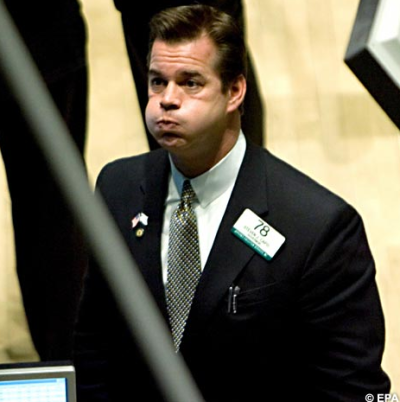
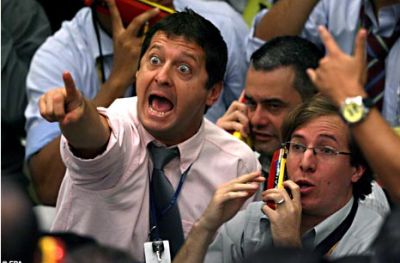
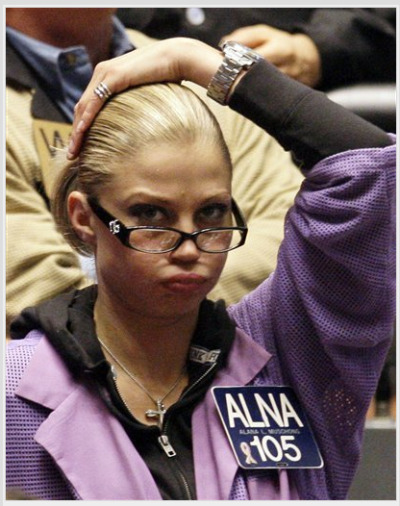
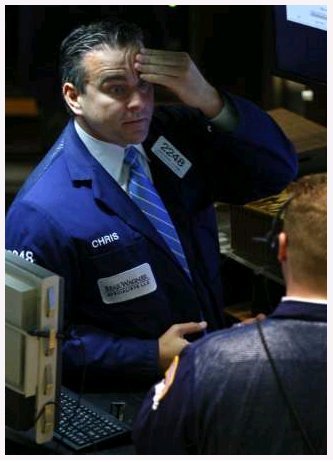
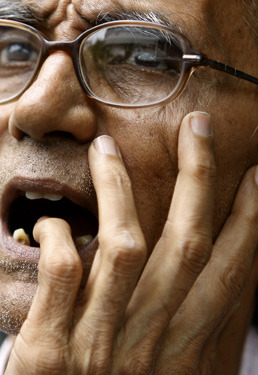
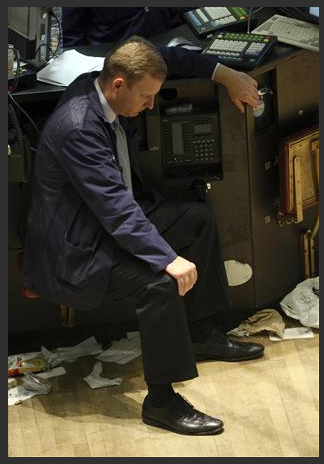
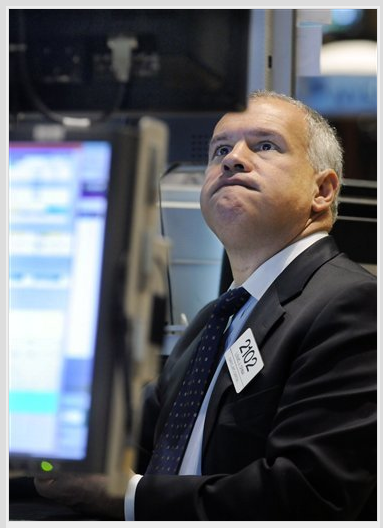
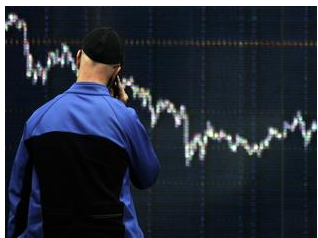
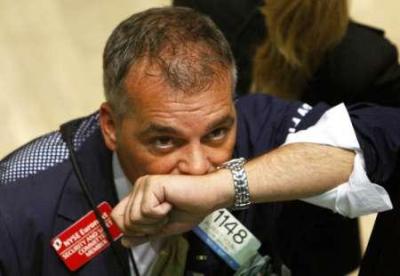
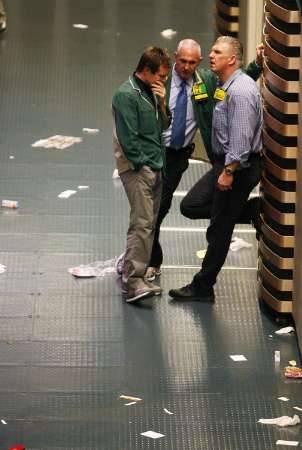
Sad Guys On Trading Floors

C'mon guys, it's just money...

Sad Guys On Trading Floors

Someone made a blog of this. Lot's of interesting face expressions.


Via The Big Picture.

Sunday, October 05, 2008

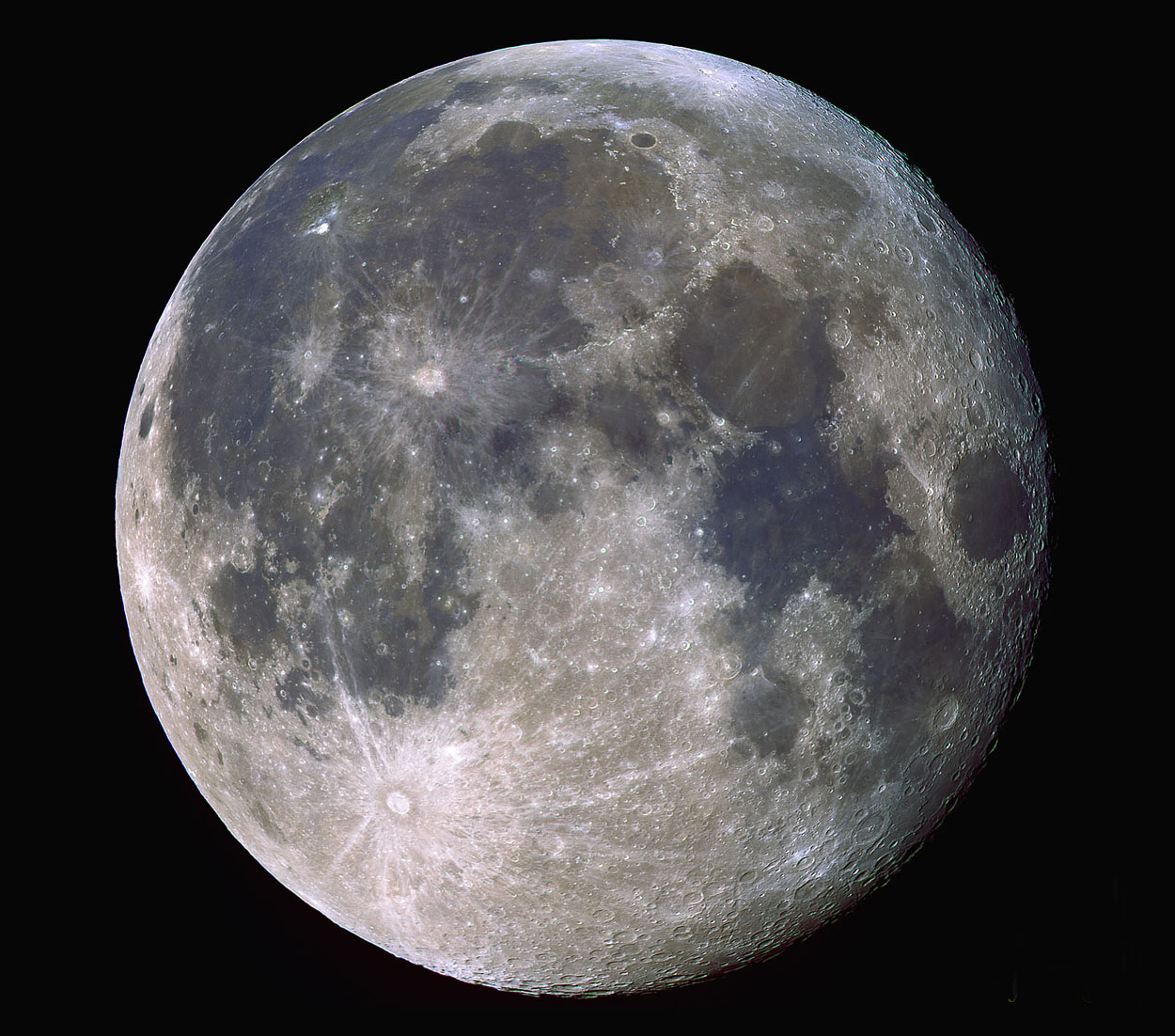
The Moon


Photo by Michael A. Stecker, click here for the full size image.

Friday, September 19, 2008

Sunday, September 14, 2008

Hotel Ukraina


Moscow river sunset time lapse

For a bigger video size, follow the link.

Had a good year as a teenager living behind the hotel Ukraina at Kutosovski Prospekt.